Tuesday, May 3, 2011

Chevrolet Camaro Wallpapers

The 2011 Chevrolet Camaro returns for its second model year with only a few minor changes. The high-shouldered, cartoonish exterior, scorching performance, and muscle-car attitude carry over with all the force of before. ust as the muscle-car feeding frenzy (first stoked a few years ago by concept cars, then the introduction of the Dodge Challenger) might have subsided, Ford turned up the heat this year with new V-6 and V-8 engines, truly resurrecting a decades-old rivalry. And what better indication than after Ford revealed the 305-hp Mustang V-6, Chevrolet announced a new 312-hp rating for its base 3.6-liter V-6 in the 2011 Chevrolet Camaro.

The 2011 Chevrolet Camaro makes some extreme sacrifices inside in order to achieve an aggressive look. Space inside is tight, without much headroom for taller drivers, while shorter ones might feel claustrophobic from the high beltline; for just about everyone, visibility is severely compromised. There's a small backseat, but it's good for only two small children, and the trunk is quite tiny. On the other hand, ride quality is excellent, with a surprising lack of road noise.

The 2011 Chevrolet Camaro performs so well that you're likely to forgive some, or perhaps all, of the 2011 Chevrolet Camaro's functionality letdowns. The base V-6 provides brisk performance whether with the six-speed automatic or the six-speed manual, and it's good for a highway rating of 29 mpg. The 6.2-liter V-8 makes 426 hp with the six-speed manual (400 hp with the automatic), and in either case, the SS is a performance icon with tire-shredding power (and 0-60 in the 4.5-second range). Steering is crisp and direct, with a level of communication, and brakes across the line are good for triple-digit speeds.

Safety and convenience features aren't forgotten in the 2011 Chevrolet Camaro—even for the high-value base V-6 model. Six airbags are standard (four in front with side-curtain airbags that extend to the second row), as are anti-lock brakes, traction control, and dynamic stability control, and crash-test ratings have been good, if not segment-leading. Although a screen-based navigation system isn't available, an OnStar navigation feature is offered; Bluetooth, a USB plug, and an iPod adapter are also available. Newly optional for 2011 is a Head-Up display, like the one that's been available in the Corvette.

Chevrolet Camaro Wallpapers

Chevrolet Camaro Wallpapers

Chevrolet Camaro WallpapersChevrolet Camaro Wallpapers
Chevrolet Camaro Wallpapers

Chevrolet Camaro WallpapersChevrolet Camaro Wallpapers
Chevrolet Camaro Wallpapers

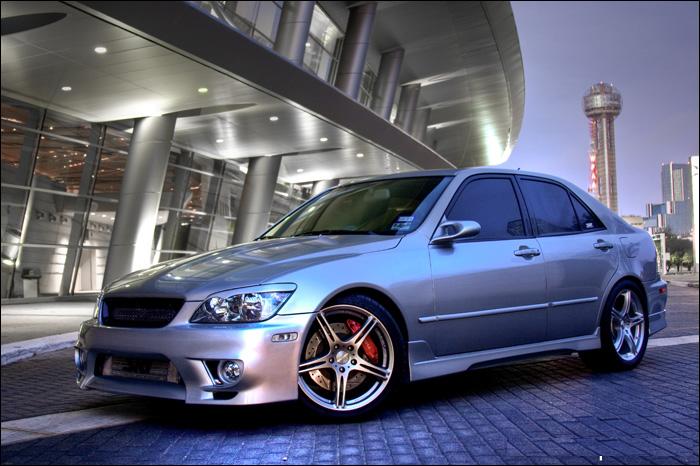
Lexus IS 300 Pictures

The Lexus IS is a series of entry-level luxury cars / compact executive cars sold by Lexus since 1998. The Lexus IS was introduced as an entry-level sport model slotted below the Lexus IS in the Lexus lineup (and outside of North America, the Lexus GS). The Lexus IS was originally sold under the Toyota Altezza nameplate in Japan (the word "altezza" is Italian for "highness") until the introduction of the Lexus brand and the second generation Lexus IS design in 2006. The Altezza name is still used at times to refer to chromed car taillights like those fitted to the first generation model, known as 'Altezza lights' or 'Lexus-style' lights.

The first generation Altezza (codename XE10) was launched in Japan in October 1998, while the Lexus IS 200 (GXE10) made its debut in Europe in 1999 and in North America as the Lexus IS 300 (JCE10) in 2000. The first generation, inline-6-powered IS featured sedan and wagon variants. The second generation Lexus IS (codename XE20) was launched globally in 2006 with V6-powered IS 250 (GSE20) and Lexus IS 350 (GSE21) sedan models. A high-performance V8 sedan version, the IS F, premiered in 2007. Hardtop convertible versions, the Lexus IS 250 c and Lexus IS 350 c, debuted in 2008. According to Lexus, the IS designation stands for Intelligent Sport.

Produced as a direct competitor to the luxury sport sedans of the leading European luxury marques, the XE20 series Toyota Altezza and Lexus IS was designed with a greater performance emphasis than typically seen on prior Japanese luxury vehicles. The engineering work was led by Nobuaki Katayama, who was responsible for the AE86 project. The AS200 and AS300 Altezza sedans formed the basis for the Lexus IS 200 and Lexus IS 300 models sold in markets outside Japan, primarily North America and Europe. A hatchback/station wagon version was sold in Japan as the "Altezza Gita", and in the US and Europe as the Lexus IS SportCross. Overall, the XE20 came in three variants:

Introduced in 1998 with the AS200 (chassis code GXE10) and RS200 (chassis code SXE10) sedans, the compact vehicle was produced using a shortened front-engine, rear-wheel drive midsize platform, allowing Japanese buyers to take advantage of tax savings imposed by Japanese government regulations concerning vehicle exterior dimensions and engine displacement, and adapted parts from the larger second generation Aristo/GS. The 2.0-liter 1G-FE inline-six powered AS200 (GXE10, sedan) featured a six-speed manual transmission as standard, while a four-speed automatic was optional. The 2.0-liter 3S-GE inline-four powered RS200 (SXE10, sedan) featured a six-speed transmission, while a five-speed automatic was optional.

The design received critical acclaim at its 1998 launch, and was awarded Japan's "Car of the Year" honor for 1998–1999. A year later, Lexus began marketing the IS 200 equivalent models in Europe. The IS 200 in Europe was listed as producing 153 brake horsepower (114 kW), with a top speed of 216 kilometres per hour (134 mph), and 0 to 100 kilometres per hour (0–62 mph) acceleration in 9.3 seconds. The styling cues of the rear light clusters on the first generation models were copied by a number of after-market accessory manufacturers for applications on other vehicles. This iconic style of one or more internal lamp units, covered with a clear (or tinted) perspex cover made popular by Lexus, became known in many circles as 'Lexus-style' or 'Altezza lights'.

Lexus IS 300 Pictures

Lexus IS 300 Pictures

Lexus IS 300 PicturesLexus IS 300 Pictures
Lexus IS 300 Pictures

Lexus IS 300 PicturesLexus IS 300 Pictures
Lexus IS 300 Pictures

Monday, May 2, 2011

Nissan Leaf Pictures

Nissan Leaf finally made it… the zero emission all electric car become the 1st winner of the 2011 World Car Of The Year awards. Nissan Leaf achieve the 2011 World Car Of The Year awards after competing with 39 new vehicles at New York International Auto Show. The finalists for this events are the new Audi A8, 2011 BMW 5 Series, and the Nissan Leaf.

Nissan Chairman and CEO Carlos Ghosn has said, “It is a great joy that the world’s first, mass-marketed electric vehicle, the Nissan Leaf, has won the prestigious award”. Nissan Leaf is powered by a lithium-ion battery (requires 8 hours for fully recharged) resulting 80 kW and 280 Nm of torque. Nissan Leaf's top speed is at 90 miles per hour (140 km/h).

Nissan Leaf Pictures

Nissan Leaf Pictures

Nissan Leaf PicturesNissan Leaf Pictures
Nissan Leaf Pictures

Nissan Leaf PicturesNissan Leaf Pictures
Nissan Leaf Pictures

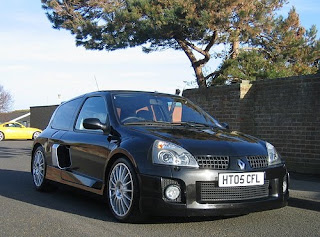
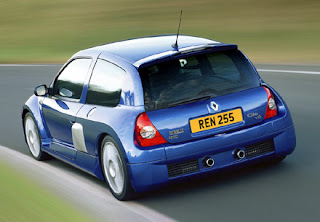
Renault Clio Wallpapers

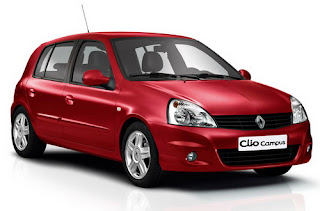
Renault Clio Campus (2009) is a new special edition model that has been announced by Renault. Based on the original version, 2009 Renault Clio Campus has a new front-end styling design. Renault Clio Campus (2009) is 3.81 meters in length and comes with some optional engines: the 1.2 60 and 1.2 16V 75 petrol engine, the dCi 65 and the dCi 85 diesel units, and also the 1.2 60 LPG engine. Renault Clio Campus (2009) is a special edition car model that continues the tradition for its previous model on 2005 which sold over 400,000 units in 22 countries. Renault continues the renewal of its compact car range with the introduction of the latest generation Renault Clio Campus, the production of which was recently split between the firm’s factories in Flins (France) and Novo Mesto (Slovenia).

- With a score of 400,000 cars sold in 22 countries since 2005, this compact and versatile hatchback has carved out a real place for itself in the market alongside Clio III. Renault Clio Campus (length: 3.81 meters) slots in the range between Twingo (3.60m/three doors) and New Clio (4.03m) to stand out as the most compact model of Renault’s five-door, versatile city car range.
· 2009 Renault CRenault Clio Campus 1 marks the introduction of a new visual identity. The front end expresses even more personality than before, while the design of the new front bumper and grille add a distinctive touch of elegance and dynamism.
· 2009 Renault Clio Campus is respectful of the environment: all the versions that feature in the catalogue comply with the three criteria necessary to qualify for the Renault eco² signature2. The LPG version, which was France’s best-selling LPG model in 2008 and was sold almost 7000 units worldwide in 2008, has been carried over.
· 2009 Renault Clio Campus boasts the same acclaimed reliability and particularly competitive running costs as its predecessor.

· 2009 Renault Clio Campus will be released for sale from June (depending on market). In France, its launch will mark the introduction of an all-new sales method developed to guarantee a competitive entry level price.

Renault Clio Campus continues its European career with this month’s launch of the very latest version of the model. Since 2005, it has sat alongside New Renault Clio in the range and sold in 22 countries, winning over almost 400,000 customers in Europe alone. In 2008, Clio Campus’ leading markets were France (40%), Italy (12%), Algeria (8%), Germany (7%) and Spain (6%). Buyers are attracted by the values championed by the Renault brand and seek a reliable car with low purchase and running costs. They will continue to find these selfsame qualities in the latest-generation version which features even more attractive styling. In recent months, the European market has been influenced by two factors which have boosted sales of A/B-segment cars:

- The introduction of CO2 emissions-related tax incentives,
- Support measures (trade-in for scrap schemes).
Renault is ideally positioned to respond to this shift in the market thanks to its particularly comprehensive range of compact models. A hatchback compact models range :whose length increases in incremental steps of 20cm:

- Twingo 3.60m / 3 doors Feisty, practical and connected.
- Renault Clio Campus 3.81m / 3 or 5 doors Compact and versatile: access to the Clio family.
- New Clio 4.03m / 3 or 5 doors Benchmark comfort and driving pleasure for its class,
plus a performance/equipment package worthy of a Csegment vehicle.
- Clio Estate 4.23m The same strengths as New Clio, plus even greater carrying capacity.

A family of small and large MPVs which feature a high-up driving position:

- Modus 3.87m The comfortable, entry level MPV.
- Grand Modus 4.03m A generously-dimensioned MPV for families.
The next generation of Renault Clio Campus will be will be released for sale from June (depending on country). In addition to its chief European markets, 2009 Renault Clio Campuswill also be available in Algeria and Tunisia. It will be known as Renault Clio Campus or Clio Storia according to the countries where it is marketed.

Renault Clio Wallpapers

Renault Clio Wallpapers
Renault Clio WallpapersRenault Clio Wallpapers
Renault Clio Wallpapers
Renault Clio WallpapersRenault Clio Wallpapers
Renault Clio Wallpapers

2011 Nissan Versa 1.8SL Sedan

2011-nissan-versa-1.8SL-sedan
2011 Nissan Versa 1.8SL Sedan

One of the most notable features that the Versa has is the six-speed automatic transmission. Precision engineered, the transmission provides the smooth flow of power from the Versa's relatively small engine to its drive wheels. Nissan also offers the continuously variable transmission (or the CVT) for the Versa. This means that the Versa has good fuel efficiency as less power is wasted as it travels from the engine to the drive wheels.


2011-nissan-versa-1.8SL-sedan
2011 Nissan Versa 1.8SL Sedan

The Nissan Versa's small engine provides good acceleration with the help of the six-speed automatic transmission. During a test, the Versa proved to be a worthwhile driving companion. The first gear of the transmission allows the vehicle to be driven up to speeds of 30 miles per hour before redlining. On the second gear, the Versa can go to 50 miles per hour before it begs the driver to shift gears. The first and second gear provides a good distance between the gear ratio so as to ensure that the vehicle will be able to move smoothly from first to second gear without even a hint of gear clashing. With the transmission and the engine working together perfectly, the Versa can reach its cruising speed of 80 miles per hour.


2011-nissan-versa-1.8SL-sedan
2011 Nissan Versa 1.8SL Sedan

2011 Nissan Versa 1.8 SL Sedan Vehicle Performance
  • Engine: 1.8L in-linefour-cylinder DOHC with variable valve timing and four valves per cylinder
  • Unleaded fuel 2011 Nissan Versa 1.8 SL Sedan
  • Fuel economy: EPA (08):, 24 MPG city, 32 MPG highway, 27 MPG combined and 357 mi. range
  • Multi-point fuel injection
  • 2011 Nissan Versa 1.8 SL Sedan 13.2gallon fuel tank
  • Power (SAE): 122 hp @ 5,200 rpm; 127 ft lb of torque @ 4,800 rpm

Sunday, May 1, 2011

Chrysler 300C Wallpapers

The Chrysler 300C is a full-size car first shown at the 2003 New York Auto Show as a concept car. Sales in the U.S. began in the spring of 2004 as an early 2005 model year car. Designed by Ralph Gilles, the new 300 was built as a luxurious sedan while the SRT-8 model was designed to be the high-performance version. The Chrysler 300C is also marketed in Australia, as the first full-size Chrysler vehicle sold there since the Valiant was discontinued in 1981. The top-line Chrysler 300C version uses a 5.7 L (345 cu in) Hemi V8. Using the Multidisplacement System (MDS), this engine can run on four cylinders when less power is needed in order to reduce total fuel consumption. The United States Environmental Protection Agency has rated the Chrysler 300C as getting 15 miles per US gallon (16 L/100 km; 18 mpg-imp) city, 23 miles per US gallon (10 L/100 km; 28 mpg-imp) highway. When all eight cylinders are needed, the Chrysler 300C can make 340 hp (250 kW) and 390 ft·lbf (530 N·m) torque. It uses a five-speed automatic transmission and comes standard with 18-inch chrome-clad alloy wheels, Chrysler's MyGIG Infotainment System in 2008 and SIRIUS Satellite Radio and Backseat Television in 2008. The HEMI engine includes a pushrod induction tube, located on the side of the engine-block. This tube makes the 300C more fuel efficient and quicker, because of the air being "pulled and pushed" into the engine's induction area. The engine uses the HEMI, or double rocker configuration, with a cam-in-block, overhead valve (OHV) pushrod design. There are two spark plugs per cylinder to assure complete fuel/air mixture burn and decrease emissions.

Chrysler 300C Wallpapers

Chrysler 300C Wallpapers

Chrysler 300C WallpapersChrysler 300C Wallpapers
Chrysler 300C Wallpapers

Chrysler 300C WallpapersChrysler 300C Wallpapers
Chrysler 300C Wallpapers

Toyota Rukus Wallpapers

When you think of Toyota, sex appeal does not spring to mind - more likely the workhorses of suburban streets and paddocks, the Corolla or the LandCruiser. Toyota hopes to change all that with the launch of its new car, the Rukus, its first attempt in this country to add some real sizzle to its dependable but plodding brand. The squat "urban utility vehicle" was to be officially unveiled last night, not to the motoring media but to 250 of Sydney's hippest at a restaurant in North Bondi, who were to see two cars painted specially by the designers Fernando Frisoni and Kirrily Johnston.Billed as a new class of car aimed at young singles and young urban families, the Rukus is the first of what Toyota says will be a stream of vehicles aimed at niche audiences, says Mike Breen of Toyota Australia. "If you think of the Corolla or the Camry, Toyota has always really been about vehicles with mass appeal. This is a market that we've never really explored before. It's a very focused offer and a new thing for us." For years Toyota successfully marketed itself as sellers of the everyman's car, of good quality and dependable. But even before this year's recall of US models dented those values, the halo has been slipping. Toyota is losing market share; its 23.6 per cent share of the automotive market in Australia has fallen to 20.5 per cent. The need for Toyota to innovate and reinvigorate its brand is clear. "Toyota Rukus is not a mass-market car: it's an acquired taste that will polarise opinions," said Scott Thompson, Toyota's marketing manager. He said it was aimed at trend-setters who had never considered a Toyota before. In the US the Toyota Rukus was launched in 2003 as the xB under the Scion brand Toyota created specifically for younger car buyers. Toyota Australia has elected to keep the Toyota name.

Mark Green, a partner in the ad agency Three Drunk Monkeys, worked on the Toyota business at Saatchi & Saatchi for many years. Now he is behind the work for the Kia Soul, another box-on-wheels type car his agency launched last year. It encouraged people to customise their cars so no two are alike - almost exactly the strategy Toyota is using to push Toyota Rukus onto a market that is never going to buy into a cookie-cutter corporate car brand. Fewer than 200 Souls have been sold in the past year. Green believes only a break from Toyota's design, styling and marketing would convince those who had not considered a Toyota to think again. "To have a genuine youth product you have to be a lot more radical than the other products. They have moved by degrees in the past with some Corollas and to an extent the Yaris, but they are still the cars your parents would like you to drive."


Toyota Rukus Wallpapers

Toyota Rukus Wallpapers

Toyota Rukus Wallpapers

Toyota Rukus Wallpapers