Showing posts with label what is muscle car?. Show all posts

Sunday, August 7, 2011

First Muscle Car - Brief History of Muscle Cars in the World

The Birth of First Muscle Cars 
Already about 100 years, technological competition and sales of various types of cars into a business that demanded a lot of people. Market hectic buying and selling a car can not be separated from the history of the emergence of automobile racing. Racing Car also experience innovation, not only in circuit race, but it appears that street racing cars then often known as muscle cars.

Two types of motor sport has a very important role in muscle car history. One is the stock-car racing, which began to emerge as some "good old friends" to form the National Association for
Stock Car Auto Racing in 1947.

Inspired by the runner turbo cars are identical with booze and their ability to avoid the police. The first NASCAR race track dimuali on the beach. These events draw the crowds, and soon became a thriving business. Then came a variety of other organizations, such as the American Automobile Clubs, began encouraging them to invest in car racing.

The emergence of Drag Racing, meanwhile, pulled its own fans. This competition is held in a quarter-mile acceleration comes with street racing informal (and illegal) are associated with hot rodders, shade tree mechanic who turned out the old and the Model T Ford Model A fast, exciting road cars. Drag racing has gained momentum in 1951 when the National Hot Rod Association was formed in - car-crazy Southern California.
At the same time, the head of the Wally Parks NHRA Hot Rod magazines began to promote the sport and performance-tuned street car. The early '50s also saw the debut of Motor Trend and other car-enthusiast magazines, the first of many.

Growing public interest in speed and power gave birth to what many consider the first muscle car, 1949 Oldsmobile Rocket 88. It is a car enthusiast can understand the heat: a powerful new engine in the Olds lighter body. And the machine was successful: the first American high-compression overhead-valve V-8, the results of research at General Motors began well before the war. Although GM's Cadillac Division introduced a similar V-8 for '49 is the smallest, fleeter Olds 88s that captured public attention, especially when they begin to dominate stock car racing.

Because of the success in Detroit never goes unmatched for a long time, the rocket soon have a competitor showroom 88s and horse racing. In 1955, nearly all U.S. plant offers lightweight, efficient V-8. Two legends of the best performance yet for this day.
One is the Chrysler Hemi Corporation, first in 1951 and named for the environment or semi-hemispherical shape of the combustion chamber. No less significant is the 1955 Chevrolet small-block V-8, the project so successful that the basic concepts are still in production techniques. But the horse race is not always about pure speed. Detroit soon learns the importance of hot cars to give their name and marketing direction combined with enthusiasm for tire smoke.

Because bigger is better in 50 Fabulous, wearing a Detroit car pounds and inches every year, requiring larger machines just to maintain the level of acceleration. But many buyers are still willing to buy a speeding, and automakers have responded with all sorts of performance improvements and weight of power sharing option increases. Most were developed only to meet racing rules - and the car company proud. Rarely ordered by the major buyers, these "pieces of speed," but promoted an image of improved sales performance.

So, Dodge, for example, offered powered-up "D-500" engines for all models in its line in 1956, including bottom-line of lightweight two-door sedan - which, of course, is the selection of pilots.Brand performance of other hardware prominently displayed in a limited edition model. Chrysler led the way with the 1955 C-300, fusion inspired Hemi power and pitfalls of luxury cars is quickly becoming the new NASCAR star. With 300 horsepower, it was just announced as "the most powerful car in America."


The 1955 Chrysler C-300 was touted as American Most Powerful Car
300B next year to achieve the ideals of engineering a long-sought power per cubic centimeter of engine displacement. For 1957, Chevrolet leadfoot lured buyers with fuel injection are available, Ford and Studebaker, supercharged. Pontiac offered both fuel injection and "Tri-Power" (three two-barrel carburetors). Even Hudson problematic, limited to the big 6-cylinder and 1954, succeeded in winning the NASCAR "Twin-H Power" dual carbs and varieties, plus hot "7-X" factory race.

All of these muscles screeched to a halt in early 1957. Detroit, through their Automobile Manufacturers Association, agreed to "ban" imposed himself on the ads factory racing and performance-oriented sponsored. Public, the industry was subject to pressure from increasingly vocal lobby security. Private, business as usual.

Engineers continue to work in a hotter engine and other under the table-of-race support, hoping that high performance is politically correct again soon. They were right, because you'll see the next page.

Friday, July 29, 2011

Three simple things for keeping your car in working condition as Top Sports

Toyota FT HS Hybrid-Sport Car Concept-Rear View
Everyone who is a sports car owner is a little more expensive than the average family and it's for good reason. A sports car is built only for two things. They are built for beauty, and they are built for speed. Now, there are some people who would argue the order in which the two are willing, however, still comes down to beauty and speed that make a sports car so desirable an article.
Generally, lower end sports cars start in the range of $ 15,000. While sports cars get more sophisticated in the range of one hundred thousand dollars and higher. The most sophisticated sports cars are not exactly the kind of car is bought on a whim, and are usually given exceptionally good care and maintenance.
 
Toyota FT HS Hybrid-Sport Car Concept-Front Left View

So what is left for the rest of us? They lower end sports cars are more suited to the individual every day, but they deserve special care. If you have a sports car, then you can understand how good it feels when you're tearing down the road in style. That's why you want to take care of your investment so you will last for many years to come.

Since sports cars are built for speed is safe to assume that in some cases, owners will use this power to achieve some speed while driving. It's just human nature for the sports car owner to want to see what the car can do on the open road, and sometimes even see how she handles in the corners.

It's safe to assume that most owners of sports cars do not drive their sports car on a daily basis. In fact, most sports car owners like to take care of your vehicle as they would a favorite pet. So for this reason most sports cars will want to see him in the garage or another protected area until now to unleash the power.

Before leaving his sports car one of the most important things you could do is check your tires. When the vehicle is driven at higher speed, the wear put on the tires is greater so it is important to check the air pressure and wear on the tires trend. Maintaining the manufacturers suggested tire pressure will not only make your car perform better in handling it will also save money for the owner, saving the tire tread.
 
Toyota FT HS Hybrid On Speed Driving-Sport Car Concept-Front Right View
Another thing that is very important that you maintain control over the oil level in engine. Cars that are driven hard, as one. As a sports car, can sometimes get a leaky gasket or seal which will cause the car to get low on motor oil So it is important to check the oil periodically to ensure that you do not get down the road and have engine seize suddenly from lack of oil in the engine.

Modern sports cars have several types of built-in filters. These filters include oil filters, gas filters and air filters. Depending on what type of car you have, could have more than one air filter must be changed on a regular basis. This keeps the car running smoothly and will make it use less gas and have more power. Of course the oil filter based be changed each time the oil is changed. Most cars need their oil changed every three to five thousand miles or so. Be sure to consult your manufacturer's specifications to determine when you should have this regular maintenance performed.
 
Another Sport Car From Honda:


The Muscle Car-Motor can move you with 'the power'

Muscle Car Picture by John Gunnell

People say 'motors with the power to move you' as 'mucle car'. One example of 'muscle car' is the Sports Car C-Class diesel models with common rail technology. That's  not surprised because diesel sports car will enter the teritory. Three efficient and powerful CDI engines are available for the new C-Class. The C230 CDI is a unit of a six-cylinder common-rail unit with an output of 165kW (224hp), which accelerates the car to 100km / h in 7.7 seconds. The two units CYLIN 4, the C200 and CDI2 C220CDi suffered numberous technical improvements and now deliver even more power and torque significantly. 

Thanks to these measures, such as the expansion of the spray nozzles for piston cooling oil to improve and optimize the supply of oil to the plain bearing, the C200CDI2 now develops 100kW (136hp) and C220CDi has an output of 125kW (170hp). Added to this, metal glow plugs were replaced on both engines for other ceramics that are capable of reaching higher temperatures to improve cold running properties. All diesel engines are naturally equipped with a particulate filter.

Muscle Cars Start Racing

Muscle Car Wars-New Camaro-On Road Driving

Muscle Car Engine View

1971 Dodge Challenger RT-Modern Muscle Car-Front View Picture
source:myfirstmerc.com/sportscars/muscle-cars.php

Wednesday, July 13, 2011

The First Muscle Car of American Muscle Car

"Muscle Car" is a term that refers to a wide range of cars with high performance. This term generally refers to the model of car in Australia, South Africa and the Americas. This car is usually a secondary 2-door rear-wheel drive vehicles, has a big powerful V8 engine, and sold at very low prices.

"muscle cars", which first came out between 1960 and 1970. In most cases, the main objective is to race muscle cars on the road. They are different from the GTS and sports cars. This car has two seats or 2 +2, is aimed at tourism and road racing. As the muscle car smaller.

For these types of classic cars, country of origin and age of the car determine the price, but not for the muscle cars. Use the "muscle car" term only occurs after the end of production vehicles. During the time when production of the muscle car is still in its heyday, the American media think of them as "super car".

First Muscle Car - Sample Picture


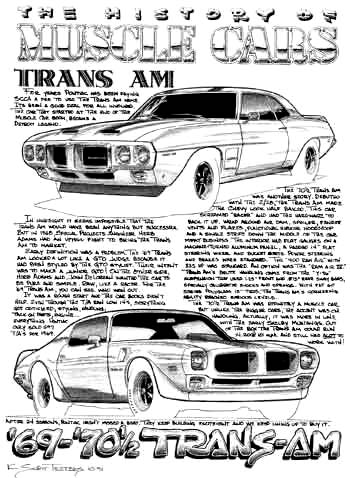
Muscle Car '69 - 70

Modern Muscle Car - Sample Picture

Tuesday, June 28, 2011

Most Legendary Ten Muscular Cars (Muscle Car)

If we flashback automotive history, we will remember the emergence of some legendary cars that became the center of attention of automotive enthusiasts, especially the drivers who crave a car that can go fast and agile. Answering the needs of several automotive enthusiasts, especially race cars, comes the term muscle car.

Muscle car is a car that was powered and has a very fast pace. Other nicknames are the mighty Iron Star. This car was made to control and defeat the arena. This car is very nimble and agile even rubber wheels are usually burned by the movement of the wheels. This type of car is legendary in America in the 1960s-1970s.

Here is a list of 10 best Muscle Cars in the world that many called Monster Road.

1. 1967 Shelby Mustang GT500
2. 1966 Shelby Cobra 427
3. 1969 Chevy Camaro Z28
4. 1970 Chevelle SS 454
5. Plymouth Hemi 'Cuda 1970
6. 1965 Pontiac GTO
7. 1970 Mustang Boss 302
8. 1969 Dodge Charger
9. 1968 Pontiac Firebird Coupe
10. 1970 Buick GSX


Saturday, May 14, 2011

Have you know What Muscle Car is?

According to the June 1967 issue of Road Test magazine, a "muscle car"is "exactly what the name implies. It is a product of the American auto industry by adhering to the philosophy of the hot rodder to have a small car and putting a BIG engine in him. The Muscle Car is Charles Atlas kicking sand in the face of weak 98 (73 kW) horsepower. "[7] Peter Henshaw, the author of Muscle Cars, from which this quotation is taken, it also states that the muscle car was designed for the straight-line speed, and do not have "sophisticated chassis", "engineering integrity"or "graceful appearance" of European cars, high-performance [7].

However, opinions vary as to whether high-performance cars in full size, compact, and pony cars qualify as muscle cars [8].

The following is a list of muscle cars and their makers (along with every make of car matching pony, if applicable):